
Carotid Plaque and Stenosis Surveillance
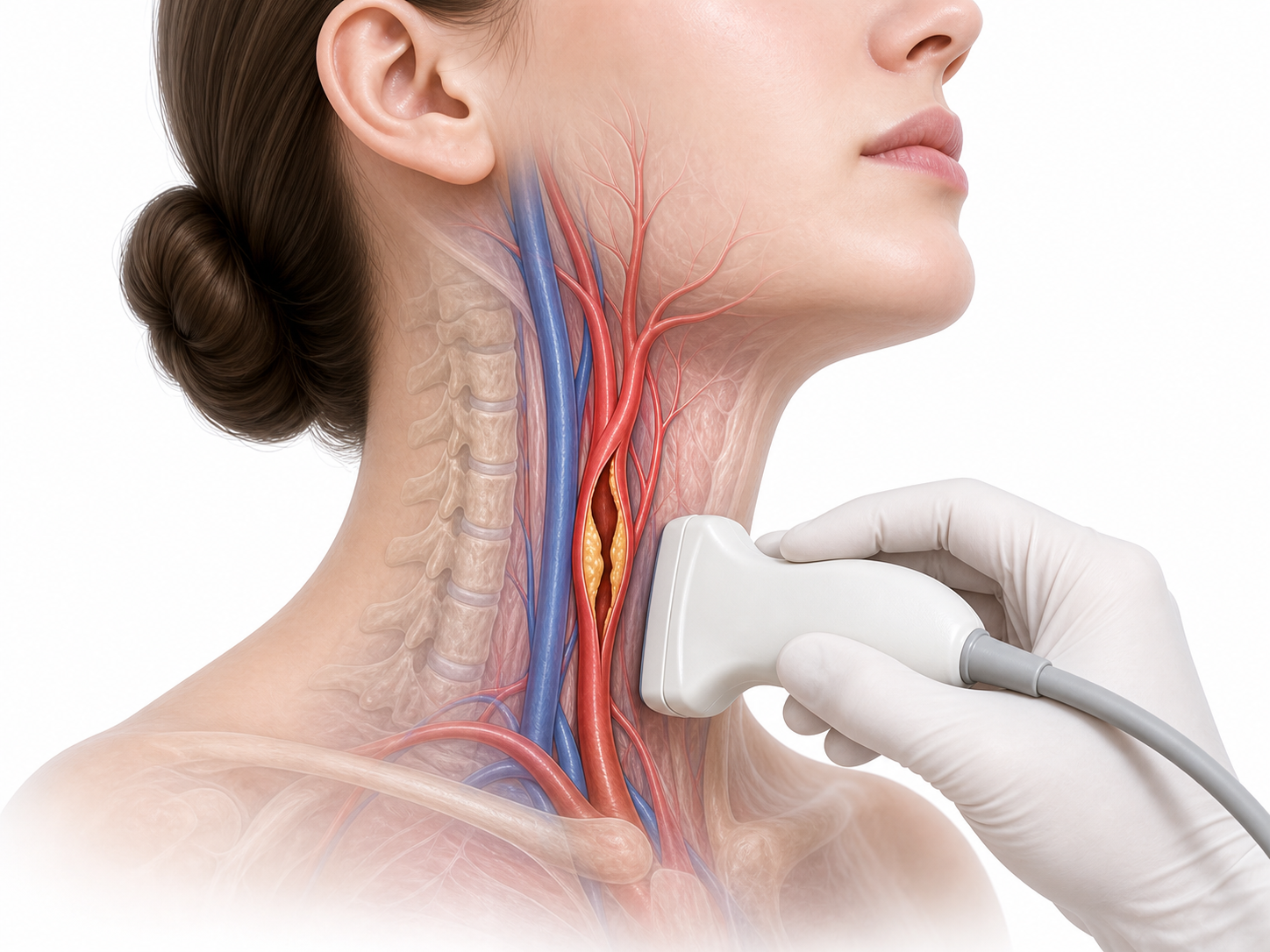
A structured carotid duplex follow-up service for plaque, narrowing, prior reports, bruit, and physician-directed stroke-risk evaluation in stable patients.
Duration
30-45 minutes
Location
Salmiya
Visit Time
30-45 minutes
Preparation
No special preparation. Bring previous carotid reports, stroke/TIA history, and current medications.
Clinic
International Hospital, 2nd Floor, Vascular Department
Best for
When the question is vascular
What surveillance means
Carotid surveillance tracks plaque appearance, narrowing estimate, and blood-flow velocities over time. The trend can matter as much as one isolated measurement.
Why previous reports matter
A prior report helps compare the same side, vessel segment, velocity range, and stenosis category. Bring the oldest and newest reports if available.
Stable scan, urgent symptoms
Carotid duplex is useful for stable assessment, but active stroke-like symptoms should not wait for an outpatient ultrasound appointment.
Face drooping, arm weakness, speech difficulty, sudden vision loss, severe sudden headache, or new neurological symptoms need emergency care first.
For sudden or severe symptoms, call Kuwait emergency services on 112 or go to the nearest emergency department. Do not wait for a WhatsApp reply.
Booking Path
From question to report
Prepare the previous carotid report and reason for follow-up for the visit. Do not send them through WhatsApp; wait for a secure channel if requested.
Prepare stroke or TIA history, bruit, cholesterol, diabetes, smoking, and blood-pressure details for secure clinical intake.
The report is prepared for the treating physician’s risk-management plan.
Patient Questions
Practical details before the visit
This information is general and does not replace physician assessment. For severe symptoms, call Kuwait emergency services on 112 or go to the nearest emergency department.
Related Services
You may also need
Carotid Duplex Assessment
Learn how this related scan fits into the diagnostic pathway.
Carotid Doppler
Carotid Doppler for artery narrowing, plaque assessment, stroke-risk evaluation, and follow-up after vascular referral.
Dr. Ahmad Al Harbi
Profile for Dr. Ahmad Al Harbi, Accredited Clinical Vascular Specialist and Head of Vascular Lab at The International Hospital in Salmiya, Kuwait.
Real Reviews Help New Patients Find the Right Care
If you have already visited the vascular lab, sharing an honest Google review helps future patients understand the location and service experience.
Please keep reviews public-safe and avoid sharing private medical details.