DVT Warning Signs: When Blood Clots Become Dangerous
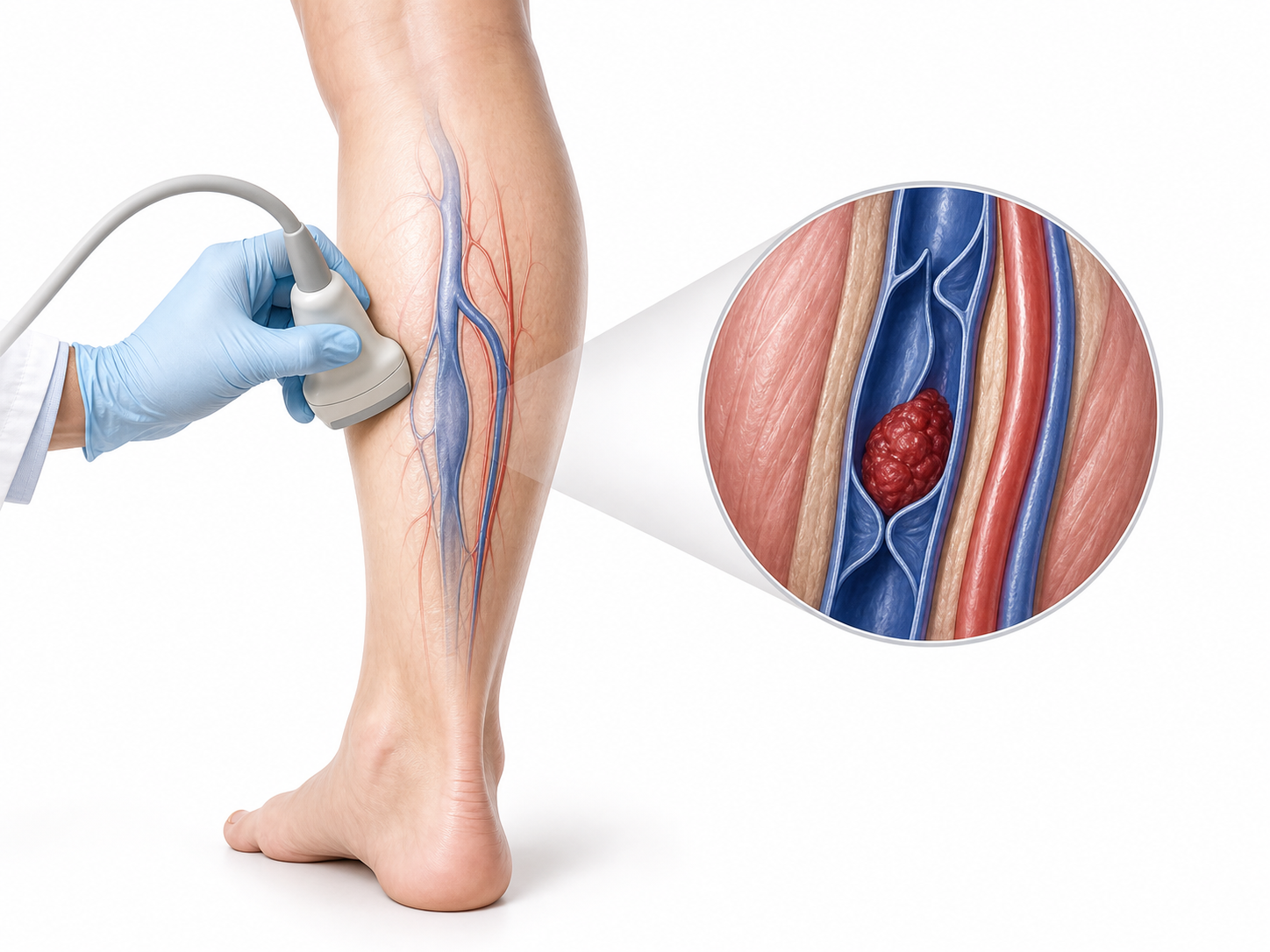
Understanding Deep Vein Thrombosis (DVT)
Deep Vein Thrombosis occurs when a blood clot forms in a deep vein, usually in the legs. If left untreated, it can lead to serious complications, including pulmonary embolism.
Warning Signs of DVT
In the Affected Leg:
- Swelling: Often in one leg only
- Pain: Cramping or soreness, often starting in the calf
- Warmth: The skin feels warm to the touch
- Redness: Skin discoloration
- Visible veins: Surface veins may become more visible
Emergency Signs (Pulmonary Embolism):
- Sudden shortness of breath
- Chest pain that worsens with breathing
- Rapid heart rate
- Coughing up blood
- Feeling lightheaded or faint
If you experience these symptoms, call Kuwait emergency services on 112 or go to the nearest emergency department immediately.
Who Is at Risk?
- Recent surgery or hospitalization
- Long-distance travel (flights over 4 hours)
- Pregnancy and postpartum period
- Cancer patients
- Use of hormonal medications
- Previous DVT history
- Obesity
- Age over 60
- Smoking
Risk-Reduction Tips
- Move regularly when it is safe to do so, especially during long trips or periods of immobility
- Discuss your individual risk before long travel or planned immobility if you have had a previous clot, recent surgery, cancer, pregnancy, or another important risk factor
- Use compression stockings only when they are suitable and correctly fitted, ideally after advice from a clinician
- Do not start aspirin or an anticoagulant to prevent DVT unless it has been prescribed for you
- Seek prompt medical assessment for possible DVT symptoms rather than trying to diagnose a clot yourself
DVT Assessment at Vascular Lab Kuwait
When DVT is suspected, prompt clinical assessment matters. Compression and venous duplex ultrasound may be used when clinically requested, with findings documented for medical review. Chest pain, shortness of breath, fainting, or severe symptoms require emergency care immediately: call 112 in Kuwait or go to the nearest emergency department.
For a stable, non-emergency concern, WhatsApp may be used only to coordinate the examination name and preferred appointment time. Do not send symptoms, referral notes, reports, or other medical details there; wait for the team to confirm a secure clinical channel.
Related Services
Need Expert Consultation?
Book your appointment with Dr. Ahmad Al Harbi for comprehensive, specialized assessment