How to Choose a DVT Assessment Provider in the Gulf Region
Why Choosing the Right DVT Doctor Matters
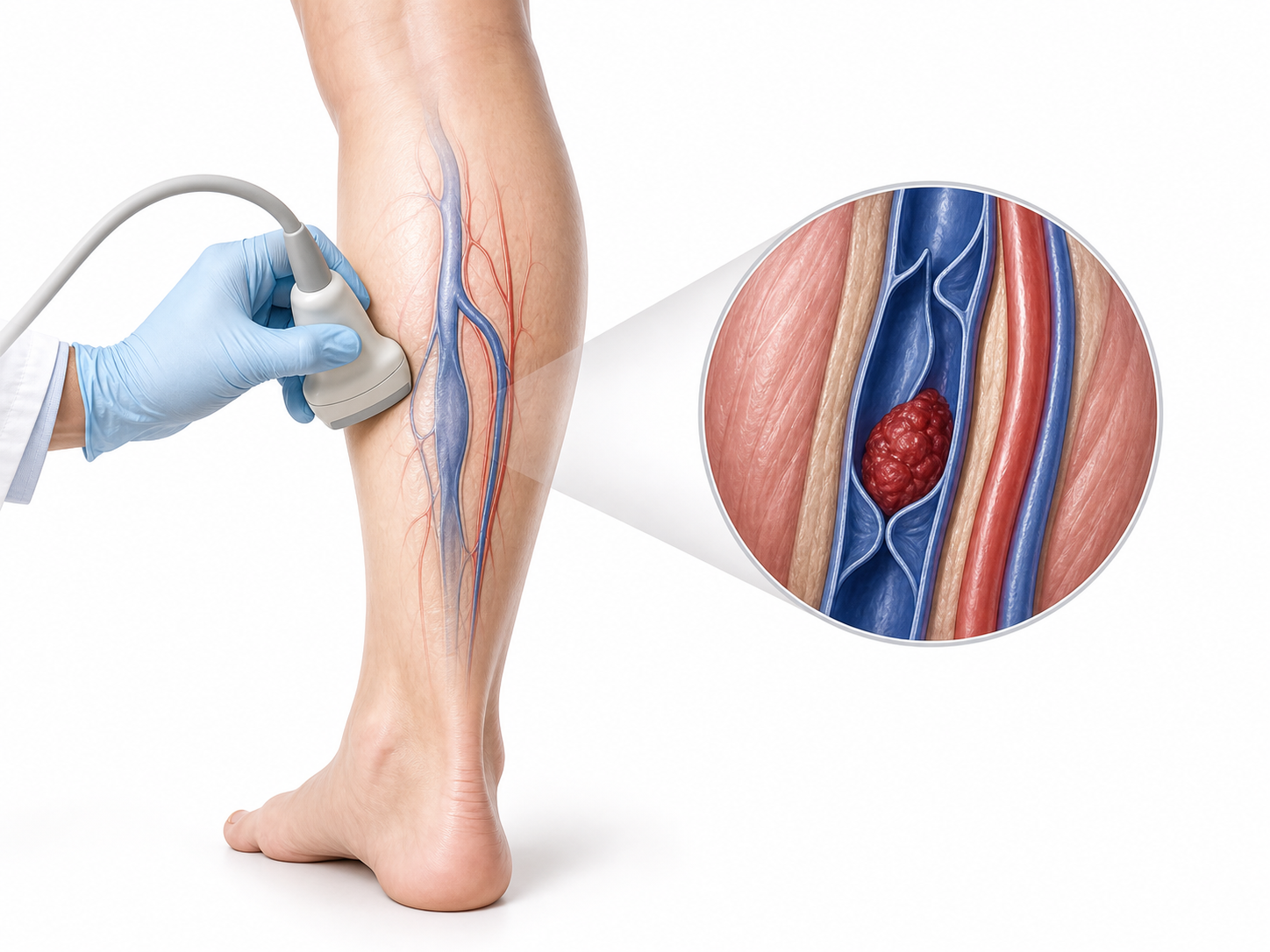
Deep Vein Thrombosis (DVT) is a serious condition that requires prompt medical assessment. This guide explains useful credentials, ultrasound processes, documentation, and referral pathways to discuss when choosing a provider. It does not replace urgent or emergency assessment.
What to Look For in a DVT Assessment Provider
Essential Credentials to Look For
- Vascular Ultrasound Certification
- RVT (Registered Vascular Technologist) - USA
- RPVI (Registered Physician in Vascular Interpretation) - USA
- Specialized vascular ultrasound training
- Advanced Education
- MSc or PhD in Vascular Ultrasound
- Fellowship in Vascular Medicine
- Continuing education in venous disease
- Experience
- Years of practice in vascular diagnostics
- Volume of DVT scans performed
- Documented experience with vascular ultrasound and structured reporting
- Equipment Quality
- Modern duplex ultrasound machines
- Proper probe frequencies for venous imaging
- Accredited laboratory standards
Questions to Ask Before Booking
- Is the requested examination available for your referral or symptoms?
- Who performs and interprets the vascular ultrasound?
- How are findings documented and shared with the referring clinician?
- When is urgent or emergency care more appropriate than a clinic appointment?
- Is communication available in a language you understand?
Practical Quality Questions
Ask how the service handles:
- coordination with the referring or treating clinician
- compression and Doppler techniques selected for the clinical question
- documentation of relevant images and measurements
- urgent escalation when concerning findings or symptoms are present
- explanation of the report and its limitations
Compression Ultrasound in DVT Assessment
The examination protocol depends on the referral, symptoms, previous imaging, and clinical context. It may include:
Complete Protocol
- Patient positioning: Standing and supine positions
- Targeted or extended scanning: According to the requested protocol and clinical context
- Compression at each level: Testing vein compressibility
- Doppler assessment: Blood flow evaluation
- Documentation: Images and measurements at key points
What the Doctor Should Check
- Common femoral vein
- Superficial femoral vein
- Popliteal vein
- Calf veins (posterior tibial, peroneal)
- Muscle veins when indicated
Dr. Ahmad Al Harbi and Vascular Lab
Vascular Lab lists Dr. Ahmad Al Harbi's relevant vascular ultrasound credentials so patients and referring clinicians can verify the service background:
Credentials
- RVT Certification - USA (Registered Vascular Technologist)
- RPVI Certification - USA (Registered Physician in Vascular Interpretation)
- MSc Vascular Ultrasound - UK (University of West England)
- 15+ years experience in vascular diagnostics
Why Patients Choose Us
✓ Urgent appointment availability confirmed directly by the clinic ✓ Comprehensive bilateral leg examination ✓ Detailed reports suitable for treatment planning ✓ Arabic and English consultations ✓ Central location at International Hospital, Salmiya ✓ Easy WhatsApp booking
When to Seek Urgent DVT Evaluation
Seek prompt medical assessment if you have:
- Leg swelling: Especially one leg more than the other
- Calf pain: Cramping or tenderness
- Warmth: Hot skin on the leg
- Redness: Skin color changes
- Recent travel: Long flights over 4 hours
- Recent surgery: Within the past 3 months
- Immobility: Bed rest or prolonged sitting
- Known risk factors: Cancer, pregnancy, hormone therapy
How GCC Patients Book Appointments
From Saudi Arabia, UAE, Bahrain, Qatar, Oman:
- Contact via WhatsApp: Send only the requested examination name, if known, and preferred visit dates
- Keep clinical information secure: Do not send referrals, symptoms, reports, images, medicines, or other medical details through WhatsApp; wait for the clinic to confirm a secure channel
- Confirm availability: Clinic staff confirm the appropriate appointment slot
- Use emergency services for severe symptoms: Call 112 and do not wait for WhatsApp or a clinic appointment
- Digital reports: Sent securely after examination
What to Bring
- Previous medical records
- List of medications
- Insurance cards (if applicable)
- Comfortable clothing
Questions to Ask Your DVT Doctor
Before your appointment, ask:
- What are your vascular ultrasound credentials?
- How many DVT scans do you perform monthly?
- Do you scan the entire leg or just the symptomatic area?
- When will I receive results?
- What happens if DVT is found?
Conclusion
DVT assessment requires appropriate clinical review, ultrasound technique, documentation, and a clear escalation pathway. Severe symptoms, chest pain, shortness of breath, or fainting require emergency care; call 112 in Kuwait.
Contact Vascular Lab Kuwait via WhatsApp to confirm whether the requested examination is available and appropriate for a clinic appointment.
Related Services
Need Expert Consultation?
Book your appointment with Dr. Ahmad Al Harbi for comprehensive, specialized assessment