DVT Screening & Blood Clot Diagnosis
Compression ultrasound assessment for suspected deep vein thrombosis, interpreted together with symptoms and the treating clinician's evaluation.
Before booking an examination
Sudden one-sided leg swelling needs same-day assessment by your treating clinician or urgent care today. If chest pain, shortness of breath, fainting, coughing blood, severe symptoms, worsening symptoms, or lack of urgent care occurs, call 112 or go to the nearest emergency department. Do not wait for a clinic appointment or WhatsApp reply.
The booking option below is only for stable, non-emergency concerns; this information cannot diagnose a clot.
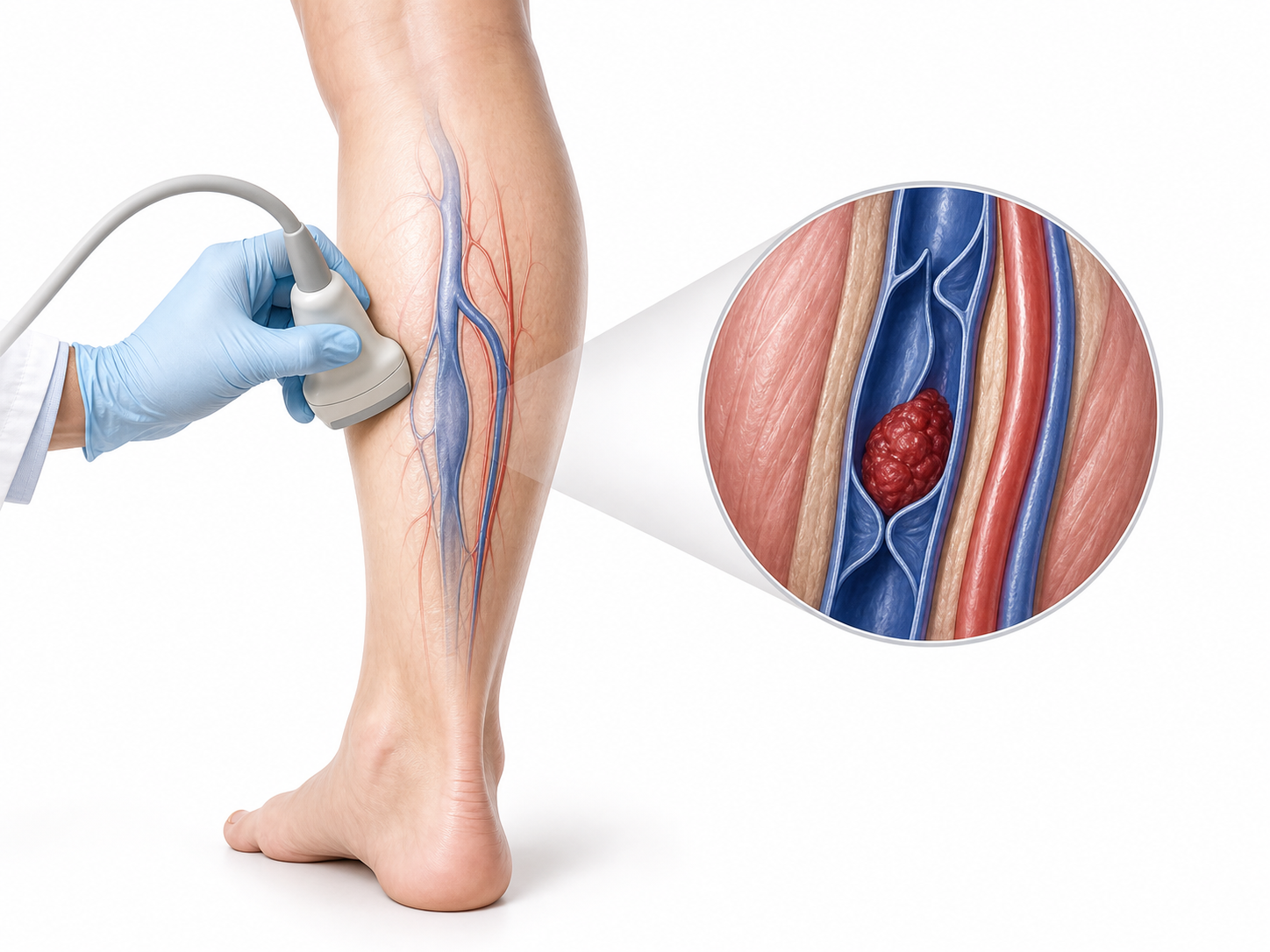
What is Deep Vein Thrombosis (DVT)?
Deep Vein Thrombosis (DVT) is a serious condition where blood clots form in the deep veins, usually in the legs. If left untreated, these clots can travel to the lungs and cause a pulmonary embolism, which can be life-threatening.
Compression ultrasound can assess the deep leg veins. Findings must be considered with symptoms, timing, clot location, and the treating clinician's evaluation.
For a stable concern that needs an examination, review the DVT scan pathway in Kuwait; sudden or severe symptoms still require urgent medical assessment.
Warning Signs of DVT
Who Should Get Screened?
15-30
minutes
Timing confirmed
Results
Common questions about suspected DVT assessment
Understanding Your Condition
Dr. Ahmad's practical note
With suspected DVT, timing matters. New one-sided swelling, calf pain, warmth, or symptoms after travel or surgery should be assessed promptly with compression venous ultrasound, and emergency symptoms should go straight to urgent care.
When to Seek Urgent Medical Care
Vascular ultrasound is helpful for stable diagnostic questions. For sudden or severe symptoms, urgent medical assessment comes first; call 112 for an emergency in Kuwait.
- One-leg swelling with pain, warmth, or redness
- Shortness of breath, chest pain, coughing blood, or fainting
- Symptoms after long travel, surgery, pregnancy, or recent hospitalization
Deep Vein Thrombosis: What Every Patient Should Know
Virchow's Triad: The Three Causes of Blood Clots
- Venous Stasis: Slow blood flow from prolonged sitting, bed rest, or long flights
- Hypercoagulability: Increased tendency to clot (pregnancy, cancer, genetic conditions, certain medications)
- Endothelial Injury: Damage to blood vessel walls from surgery, trauma, or catheters
DVT Diagnosis at Vascular Lab Kuwait
Reducing Travel-Related DVT Risk: General Guidance
- Hydration supports general travel well-being but does not by itself prevent DVT
- Move Regularly: Take periodic walking or movement breaks during long travel when safe
- Compression Stockings: Use only when a clinician recommends them for your individual risk
- Ankle Exercises: Pump your feet up and down while seated to promote blood flow
- Choose Aisle Seats: Makes it easier to move around during flights
Trusted Medical Sources
This educational content is written for patients and aligned with trusted public medical references. It does not replace personal medical advice.
Book Your Consultation
Arrange a focused vascular assessment with Dr. Ahmad Al Harbi at International Hospital in Salmiya. Reporting time is confirmed according to the examination and clinical urgency.
Related Vascular Services
Explore our comprehensive vascular diagnostic services available at International Hospital, Kuwait