DVT After a Long Flight: Symptoms, Risks, and What to Do
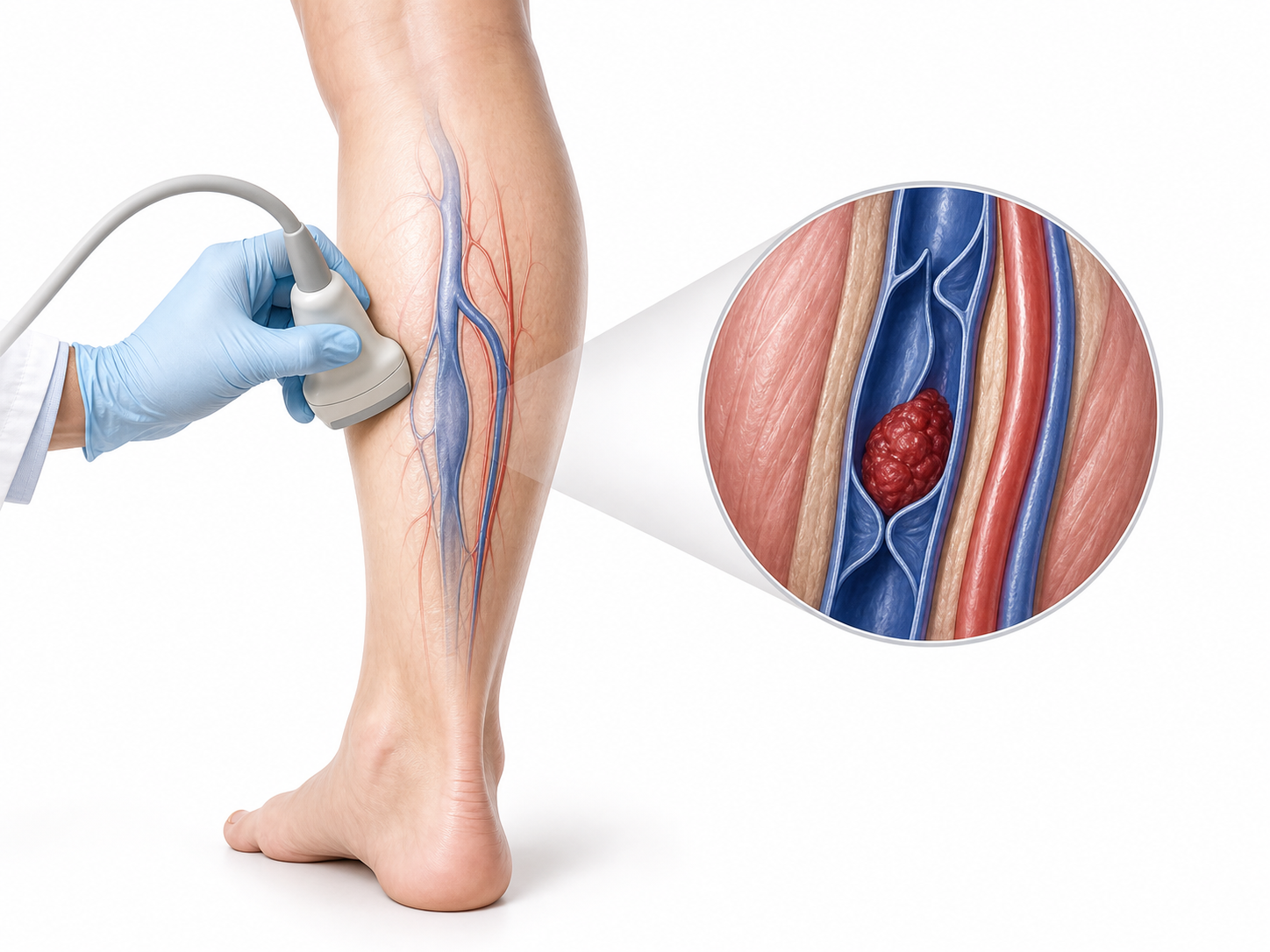
Why Long Flights Can Increase DVT Risk
During long flights, the legs may stay still for hours and the calf muscles do not pump blood as effectively. This can slow venous flow. Individual risk may be higher when long travel is combined with recent surgery or hospitalization, pregnancy or the postpartum period, active cancer, estrogen-containing medicines, previous DVT or pulmonary embolism, or a known clotting disorder.
Warning Symptoms After Travel
Watch for one-sided calf swelling, pain, tenderness, warmth, redness, or a tight feeling in the leg. Some people have mild symptoms at first, so the story of recent travel matters.
Emergency Symptoms
Shortness of breath, chest pain, fainting, rapid heartbeat, or coughing blood after possible DVT symptoms can suggest pulmonary embolism. Call Kuwait emergency services on 112 or go to the nearest emergency department immediately.
How Ultrasound Helps
Compression venous ultrasound checks whether the deep veins compress normally and whether blood flow is present. It is non-invasive and does not use radiation.
Prevention Tips for Future Travel
Move your ankles, walk when safe, and avoid remaining immobile for many hours. Drink according to your usual health needs and medical plan; hydration alone is not proven to prevent DVT. Ask your doctor whether properly fitted compression stockings or medication are appropriate for your individual risk.
Book the Right Scan
If symptoms are stable, use WhatsApp only to coordinate a DVT venous duplex appointment and preferred time. Do not send the travel date, flight duration, symptoms, risk factors, referrals, or reports there; bring them to the visit or wait for a secure channel. Call 112 for emergency symptoms.
Related Services
Need Expert Consultation?
Book your appointment with Dr. Ahmad Al Harbi for comprehensive, specialized assessment