Diabetic Foot Amputation Prevention: Complete Guide for Gulf Region Patients
Why Diabetic Foot Risk Matters in the Gulf Region
Diabetes is common across the Gulf, and diabetic foot disease can lead to ulcers, infection, delayed healing, and major complications. Individual risk varies according to circulation, sensation, previous ulcers, glucose control, footwear, infection, and other medical conditions.
Reducing Avoidable Complications
A coordinated plan may include:
- regular foot inspection and appropriate footwear
- medical review of wounds, infection, or color change without delay
- circulation assessment when symptoms or examination findings suggest a vascular problem
- follow-up intervals selected by the treating team for the patient's individual risk
Why Diabetic Feet Are at Risk
1. Neuropathy (Nerve Damage)
- Loss of sensation in feet
- Unable to feel cuts, blisters, or injuries
- May not notice problems until severe
2. Peripheral Arterial Disease (PAD)
- Reduced blood flow to feet
- Wounds heal slowly or not at all
- Tissue can die without adequate blood supply
3. Infection Risk
- High blood sugar impairs immune function
- Minor cuts can become serious infections
- Infections spread rapidly without treatment
How Complications Can Progress—and Where Prompt Care Helps
Stage 1: Unnoticed Injury
- Small cut, blister, or pressure wound
- Prevention: Daily foot inspection
Stage 2: Infection Develops
- Wound becomes red, swollen, painful
- Prevention: Immediate wound care, medical attention
Stage 3: Worsening Infection
- Spreads deeper into tissue
- Action: Urgent medical review; treatment is selected by the treating team
Stage 4: Tissue Death (Gangrene)
- Blood supply insufficient for healing
- Action: Urgent vascular and surgical assessment; the appropriate treatment depends on the individual case
Stage 5: Major Tissue Loss or Amputation
- Amputation may be required when infection or tissue damage cannot be controlled safely
- Risk reduction: Daily foot care, prompt wound and infection review, cardiovascular risk management, and vascular assessment when clinically indicated
When Vascular Testing Is Considered
What Is Diabetic Foot Vascular Assessment?
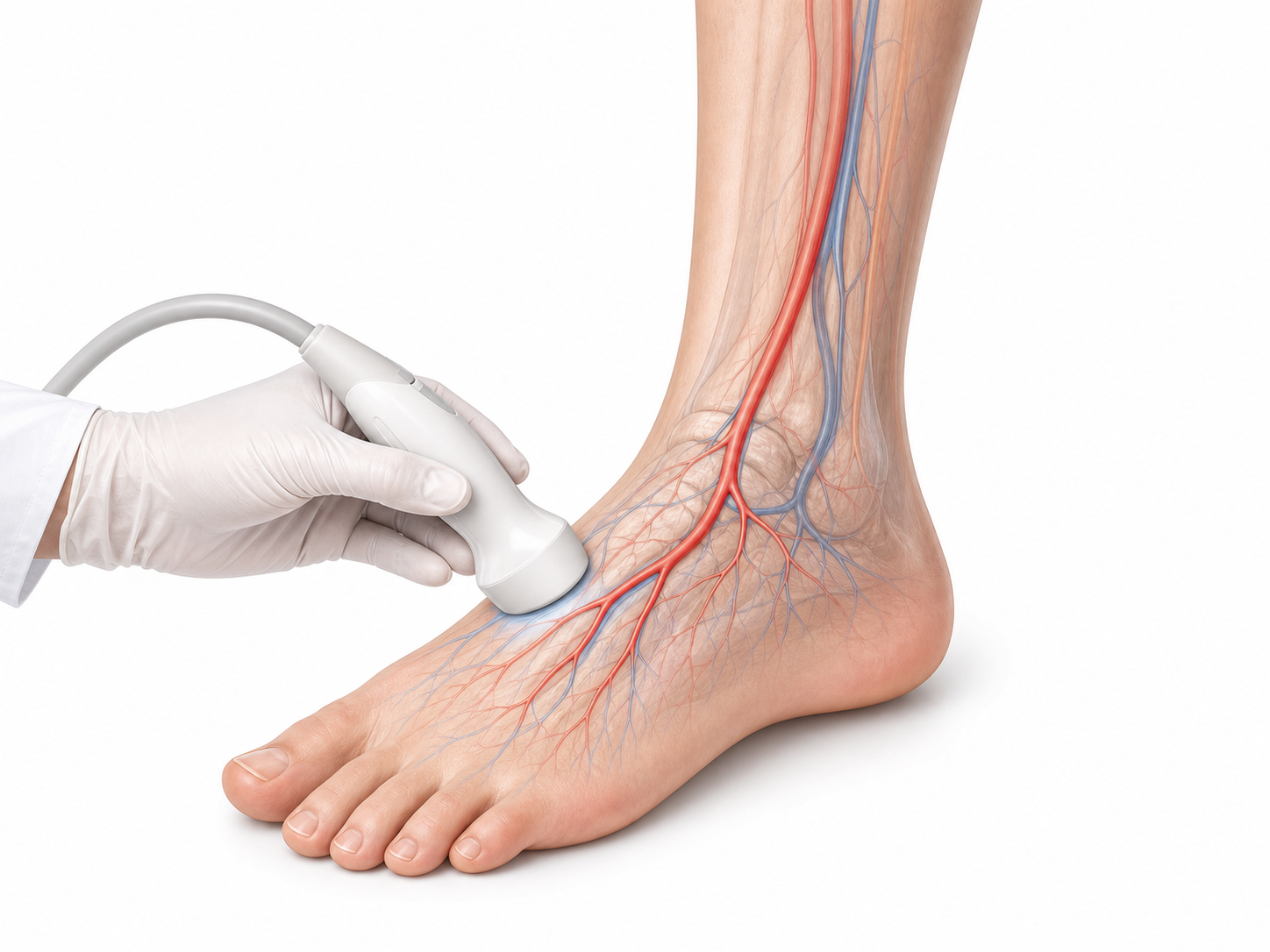
A clinical foot examination includes the skin, wounds, temperature, sensation, and pulses. If symptoms, a wound, weak pulses, or another clinical concern suggests poor circulation, non-invasive vascular testing may include:
- Ankle-Brachial Index (ABI)
- Compares blood pressure in arm vs. ankle
- Must be interpreted with symptoms, examination findings, and waveform quality
- Diabetes and arterial calcification can make ABI results less reliable in some patients
- Toe Pressure Measurement
- Can add useful information when ankle pressures are difficult to interpret
- Is selected according to the clinical question and available protocol
- Arterial Doppler Waveforms
- Analyzes blood flow patterns
- Helps assess circulation and localize arterial disease
- Pulse Assessment
- Checking pedal pulses manually
- Dorsalis pedis and posterior tibial pulses
Who May Need Non-Invasive Vascular Testing?
Testing may be considered when it could answer a clinical question or change management, including:
- Leg pain when walking or foot pain at rest
- A non-healing wound, tissue loss, or color or temperature change
- Weak or absent foot pulses or another abnormal examination finding
- Known peripheral artery disease or a previous vascular procedure
- Previous foot ulcer or amputation, particularly when new circulation concerns are present
- Selected patients with multiple vascular risk factors, as determined by the treating clinician
An annual comprehensive foot evaluation is part of routine diabetes care, but that does not mean every person with diabetes needs an ABI, Doppler, or duplex scan every year. The treating team should choose whether testing and follow-up are needed.
Warning Signs: When to Seek Immediate Help
Seek urgent medical care if you notice:
🚨 Emergency Signs
- A suddenly cold, pale, blue, or severely painful foot
- New black or rapidly darkening tissue on the toes or foot
- A foot wound with rapidly spreading redness, severe swelling, fever, confusion, or marked illness
For severe or rapidly worsening symptoms, call 112 in Kuwait or go to the nearest emergency department immediately.
⚠️ Warning Signs (See Doctor Soon)
- Numbness or tingling in feet
- Feet always cold
- Leg cramps when walking
- Slow-healing cuts or blisters
- Changes in foot skin color
Coordinated Limb-Care Approach
When PAD or another serious foot problem is diagnosed, the treating team may coordinate several parts of care:
If PAD Is Detected:
- Risk-factor management: Smoking cessation, activity when safe, diabetes and blood-pressure care
- Medications: Lipid-lowering or antiplatelet treatment only when prescribed for the individual patient
- Wound care: Specialized diabetic foot clinics
- Revascularization: Angioplasty or bypass when the treating vascular team determines it is appropriate
- Multidisciplinary care: Coordination among diabetes, wound, infection, podiatry, and vascular teams when needed
Diabetic Foot Assessment at Vascular Lab Kuwait
At Vascular Lab in International Hospital, we provide specialized diabetic foot vascular assessments:
Depending on the Referral and Clinical Question, Assessment May Include:
✓ ABI measurement with appropriate interpretation ✓ Toe pressure testing when indicated and available for the requested protocol ✓ Arterial Doppler waveform or duplex assessment ✓ Documentation of relevant examination findings ✓ A report for review by the treating clinician ✓ Reporting time confirmed according to the examination and clinical priority
Why Choose Us:
- Expert credentials: RVT, RPVI certifications from USA
- Specialized equipment: Proper tools for diabetic patients
- Experience: Years of diabetic foot assessment
- Communication: Clear explanations in Arabic or English
- Coordination: WhatsApp may be used for the exam name and preferred appointment time; medical details require a secure clinical channel
Daily Foot Care Checklist
Every Day:
☐ Inspect all surfaces of both feet (use mirror if needed) ☐ Wash feet with lukewarm water ☐ Dry thoroughly, especially between toes ☐ Apply moisturizer (not between toes) ☐ Check shoes for objects before wearing
Never Do:
✗ Walk barefoot (even at home) ✗ Use heating pads on feet ✗ Cut calluses yourself ✗ Ignore any foot problem ✗ Smoke
Always Do:
✓ Wear properly fitting shoes ✓ Wear cotton socks ✓ Keep blood sugar controlled ✓ Attend regular checkups ✓ Report problems immediately
Take Action Now
If you have diabetes:
- Attend regular comprehensive foot checks with your treating team
- Ask whether vascular testing is indicated if you have symptoms, a wound, weak pulses, known PAD, or another clinical concern
- Follow your diabetes and cardiovascular risk plan
- Inspect your feet daily and seek prompt care for a new wound, color change, swelling, or infection
Coordinate a Clinician-Requested Diabetic Foot Vascular Assessment
If your treating clinician has requested vascular testing, or your clinical examination suggests that circulation testing may be useful, contact Vascular Lab Kuwait to coordinate the requested examination. Use WhatsApp only for the exam name and preferred appointment time; do not send medical details there unless the team confirms a secure channel.
Severe or rapidly worsening symptoms should be assessed through emergency care by calling 112 in Kuwait or going to the nearest emergency department, not through an outpatient booking message.
Related Services
Need Expert Consultation?
Book your appointment with Dr. Ahmad Al Harbi for comprehensive, specialized assessment