Carotid Artery Assessment After 50: When It May Be Appropriate
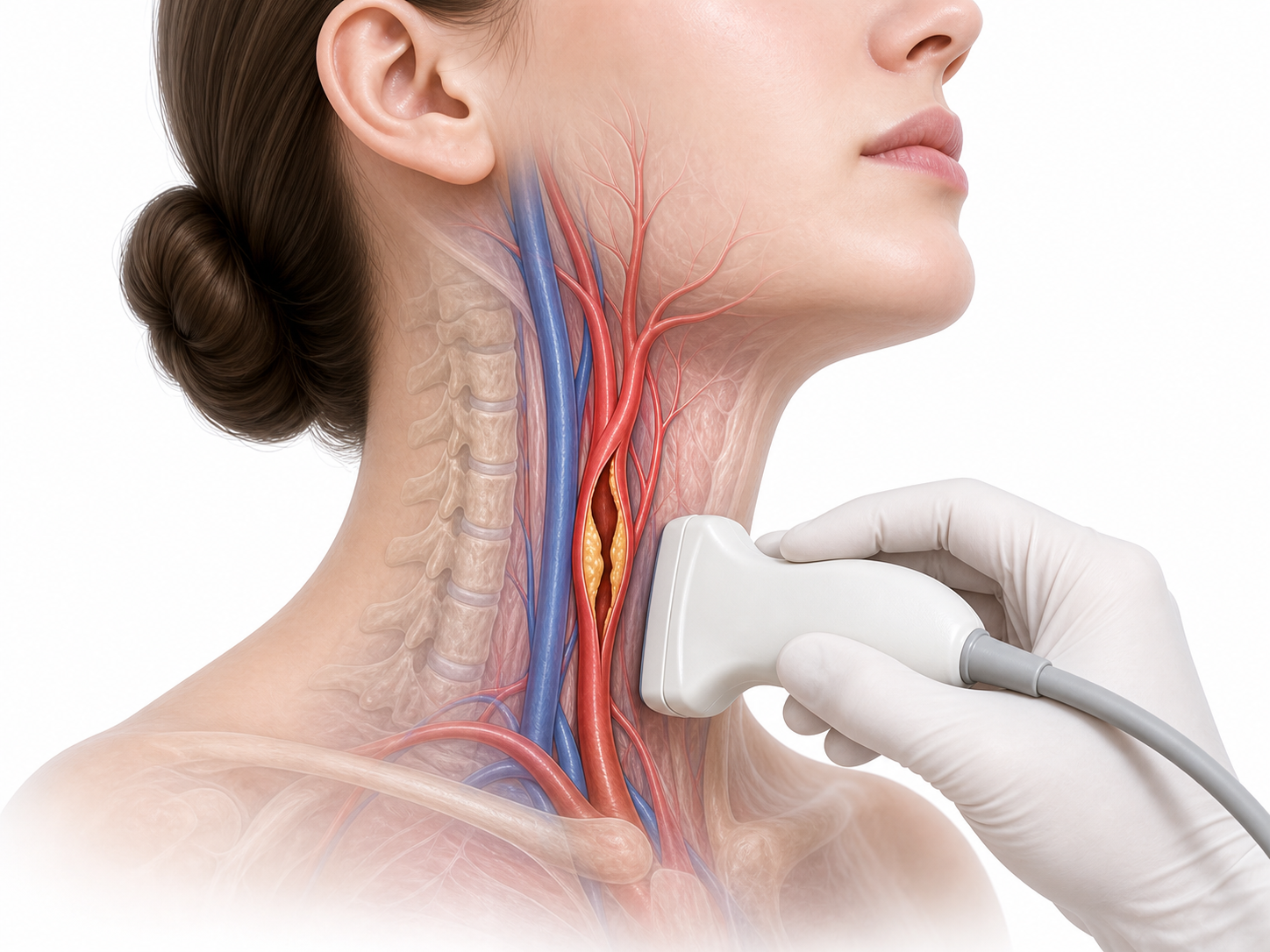
Carotid Artery Disease and Stroke Risk
Carotid artery disease is one possible contributor to stroke. Stroke risk reduction also includes blood-pressure control, lipid management, diabetes care, smoking cessation, and other measures selected by the treating clinician. Carotid ultrasound is useful for specific clinical questions, but it is not a universal screening test for people without symptoms.
Deciding Whether Assessment Is Appropriate
Carotid ultrasound is not a universal screening test for every adult. A clinician should consider symptoms, examination findings, previous stroke or TIA, known carotid disease, cardiovascular history, and the specific referral question before recommending it. Sudden facial weakness, speech difficulty, vision loss, severe imbalance, or one-sided weakness requires emergency assessment: call 112 in Kuwait or go to the nearest emergency department.
What Is Carotid Artery Disease?
The Carotid Arteries
You have two carotid arteries, one on each side of your neck. These arteries supply oxygen-rich blood directly to your brain. When plaque (fatty deposits) builds up inside these arteries, several dangerous things can happen:
- Stenosis: The artery narrows, reducing blood flow to the brain
- Plaque rupture: A piece of plaque breaks off and travels to the brain
- Complete blockage: The artery becomes completely blocked
Any of these can cause a stroke.
Why Age Alone Does Not Determine Testing
Age and cardiovascular risk factors matter for overall stroke prevention, but they do not automatically mean that an asymptomatic person should have carotid ultrasound. Routine screening of the general asymptomatic adult population is not recommended. Blood pressure, cholesterol, diabetes, smoking, activity, and other risk factors should still be addressed with the treating clinician whether or not imaging is performed.
When Might a Clinician Consider Carotid Ultrasound?
- After a stroke or TIA, as part of the medical assessment requested by the treating team
- For a carotid bruit or another relevant abnormal examination finding
- To follow known carotid plaque, stenosis, or a previous carotid procedure
- For selected cardiovascular or vascular conditions when imaging could change management
- Before or after a procedure only when a clinician has a specific indication
- For another defined referral question based on the individual patient's history
New neurological symptoms are not a screening situation; they require emergency assessment by calling 112 in Kuwait or going to the nearest emergency department.
The Carotid Duplex Ultrasound Examination
What Happens During the Exam
At Vascular Lab Kuwait, Dr. Ahmad Al Harbi performs comprehensive carotid assessments:
1. Patient Preparation
- No special preparation needed
- No fasting required
- Comfortable clothing recommended
- Neck should be accessible
2. The Examination Process (30-45 minutes)
- You lie comfortably on an exam table
- Gel is applied to your neck
- Ultrasound probe examines both carotid arteries
- Images and measurements are captured
- Non-invasive and usually well tolerated
3. What We Measure
Arterial Wall and Plaque Assessment
- The report documents relevant wall and plaque findings according to the requested examination
- Measurements are interpreted with the patient's clinical context and current reporting criteria
Plaque Assessment
- Presence or absence of plaque
- Location of plaque
- Size and extent
- Visible plaque characteristics within the limits of ultrasound
Stenosis Grading
- Uses velocity, waveform, imaging, and current reporting criteria
- Should be interpreted by the treating team together with symptoms and other clinical information
Blood Flow Velocity
- Speed of blood through the artery
- Peak systolic velocity (PSV)
- End diastolic velocity (EDV)
- Velocity is interpreted together with imaging, ratios, waveforms, symptoms, and current reporting criteria
Report and Follow-Up
Findings are documented and the reporting time is confirmed according to the examination and clinical urgency. The report may include:
- Visual images of your arteries
- Relevant measurements, images, and limitations
- A recommendation for medical review when appropriate
Understanding Your Results
The treating clinician should interpret the degree of narrowing, symptoms, previous stroke or TIA, medicines, and overall cardiovascular risk together. A website cannot prescribe a monitoring interval or treatment plan for an individual patient.
Prevention and Treatment Options
Lifestyle Modifications
- Stop smoking: Single most important change
- Healthy diet: Mediterranean diet shown to help
- Exercise: Regular activity at a level that is safe and appropriate for you
- Weight management: Reduce if overweight
- Stress reduction: Chronic stress contributes to heart disease
Medical Therapy
- Statins: Lower cholesterol and stabilize plaque
- Blood pressure medications: Control hypertension
- Antiplatelet drugs: Aspirin or clopidogrel only when prescribed or recommended by the treating clinician
- Blood sugar control: For diabetics
Interventional Options (for severe disease)
- Carotid endarterectomy: Surgical plaque removal
- Carotid stenting: Minimally invasive stent placement
- Decision based on symptoms, stenosis degree, and overall health
When Emergency Care Is Needed
Sudden facial weakness, one-sided arm or leg weakness, speech difficulty, vision loss, severe imbalance, or a new severe neurological symptom requires emergency assessment. Call 112 in Kuwait or go to the nearest emergency department; do not wait for an outpatient appointment or WhatsApp reply.
Why Choose Vascular Lab Kuwait
Expert Credentials
Dr. Ahmad Al Harbi holds:
- RVT (Registered Vascular Technologist) - USA
- RPVI (Registered Physician in Vascular Interpretation) - USA
- MSc Vascular Ultrasound - University of West England, UK
- Over 15 years of vascular diagnostic experience
Vascular Ultrasound Equipment
- Duplex ultrasound selected for the requested vascular examination
- Imaging and Doppler measurements documented according to the requested protocol
- Findings reported with relevant technical limitations
Patient Experience
- Comfortable, private examination rooms
- Arabic and English consultations
- Reporting time confirmed according to the examination and clinical urgency
- Detailed reports suitable for your doctors
- Central location at International Hospital, Salmiya
Coordinate a Clinician-Requested Carotid Duplex
If a clinician identifies a relevant examination finding, known carotid disease, a previous TIA or stroke, or another specific referral question, discuss whether carotid ultrasound is appropriate for that clinical purpose.
If carotid duplex has been clinically requested, contact Vascular Lab Kuwait to coordinate the exam name and preferred appointment time. Do not send symptoms, referrals, reports, or other medical details through WhatsApp; wait for the team to confirm a secure clinical channel.
For new sudden neurological symptoms, call 112 in Kuwait or go to the nearest emergency department rather than waiting for a clinic appointment.
Related Services
Need Expert Consultation?
Book your appointment with Dr. Ahmad Al Harbi for comprehensive, specialized assessment